Any questions ?

Please email questions to shalot@tov/com

Notice: Test mode is enabled. While in test mode no live donations are processed.

$ 0
Select Payment Method

The Elephant in the Room

Evil in the name of ________________ (fill in the blank)

Fill in the Blank


For purposes of this discussion we postulate that wars of aggression and the accompanying destruction and loss of life are evil.


Looking at the current level of violence in the world, an uninformed person might immediately point to radical Islam and say “Evil in the name of Allah.” Others such as inexperienced and equally uninformed college students demonstrating for “Palestinian Liberation”  may call the war in Gaza evil in the name of capitalism, and feel good about themselves when they burn U.S. and Israeli flags.


But both are wrong and have have fallen for the trap that real Evil-Doers set when they cloak their quest for power and control of resources behind ideologies. Even ideologies that on the surface seem good succumb to “doing well by doing good,”  when the leaders enrich themselves supported by often poor true believers, – a phenomenon not lost on certain evangelical preachers. The whole world sees Hamas’ billionaires sunbathing in Doha while Palestinians are scrounging for food and living in tents. Just to be clear, Israel was not the aggressor and the Palestinians in both Gaza and the West Bank have chosen their leaders. Many, but not all, support the enabling ideology.


What is the Historical Motive for Waging War?


While ideologies like religion, nationalism, or claims of cultural superiority frequently accompany war, the historically and universally consistent motives have always been the same: gaining or maintaining power and acquiring resources such as land, although a more fundamental cause has been suggested. 


Alexander the Great has been romantically praised as a great warrior.  He claimed in a letter to his opponent Darius that  “Your ancestors came into Macedonia and the rest of Greece and treated us ill, without any previous injury from us. I, having been appointed commander and chief of the Greek, and wishing to take revenge on the Persians, crossed over into Asia, hostilities being begun by you.” 


Most historians to this day cite revenge as Alexander’s motive. But isn’t it strange that the previous injury occurred a hundred years earlier, before young Alexander, and even his father, were even born?  In an era of low literacy, it is doubtful that the populace was reading history scrolls and crying for revenge.


The truth is that his father Philip II of Macedon was deeply in debt. When he died at age 46 in 336 BC, he left his son Alexander in charge of 34,000 soldiers who hadn’t been paid.  It immediately became obvious what must be done –  borrow more money from the aristocracy who would trust him to steal enough to pay them back with loot and land. Young Alexander did not disappoint his creditors as he conquered 90% of the civilized world.


That was Alexander the Great in 356 to 323 BC.  What about more recent examples of war and conquest? 


How do Loot and Land explain present day conflicts?


In 2025 there were seven large scale armed conflicts being waged by Islamist factions.  Islam is the ideology, perhaps even tinged with ideas of revenge for historical harms.


Consider the Sahel region of Africa where Islamist ostensibly want to establish Sharia Law in the name of Allah. In reality the the leaders  of the various factions want control of lucrative trafficking routes (weapons, drugs, people), gold mines, cattle markets, and land resources.  


Exploiting ethnic tensions and invoking religious authority is a proven strategy to claim legitimate leadership.  The Divine Right of Kings has faded from Western civilization but is still invoked by the Mullahs and Ayatollahs to convey authority to what the combatants are doing. 


Boko Haram in Nigeria wants to establish an Islamic Caliphate and reject Western culture and education. Study the motives of other Caliphates and you will see it’s all about power, wealth, and controlling the ignorant masses.


Boko Haram’s economic interests include cattle theft, kidnapping for ransom, and smuggling.


Then there is Al-Shabaab in Somalia. They also want Sharia Law as a pretense to rule as dictators over a populace who believe they are obeying Allah’s word.  With political rule they gain access to revenue from taxation, extortion, piracy, charcoal trade, and trafficking. Control over Somalia’s trade and port cities brings significant economic power.


On-going struggles in Syria tell the same story. Battles between the Druze minority and Sunni majority, in the name of ideology are just a cover for control of land and water resources; asserting political autonomy amid Syria’s weakened state structure.


Houthis vs Sunni in in Yemen: supposedly exploiting the religious divide between Sunni and Shia. Their slogan and flag (The Sarkha) translates as, “God is the Greatest, Death to America, Death to Israel, Curse be upon the Jews, Victory to Islam”. This slogan keeps the fighters motivated while the leaders  seek dominance over Yemen’s strategic ports like Hodeidah, oil resources, and trade routes (e.g., Bab al-Mandab Strait). The wealth appropriated from these resources pays the army’s wages. Proxy rivalry between Iran (backing Houthis) and Saudi Arabia/UAE (backing Sunni factions) further complicates the picture.


Even the religiously peaceful Buddhist majority in Myanmar is being conned by the military junta to persecute the Muslim minority. 


Putin’s Evil

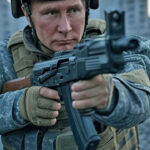
mage of Putin generated by GrokPutin’s war in Ukraine was undeniably Evil. Estimates of casualties at mid-summer 2025 are staggering.

 

Ukraine’s General Staff reported 1,041,990 total Russian troop losses (dead, wounded, missing, captured) since Feb 24, 2022. Ukrainian losses (name-confirmed) tallied 72,512 Ukrainian military deaths by June 18, 2025, plus tens of thousands missing, and over 400,000 wounded.


Ideology of Ukraine War


The reasons for Russia’s invasion of Ukraine, launched in February 2022, are complex, blending geopolitical, historical, and ideological motivations, with Vladimir Putin as the central figure.


Putin’s regime has crafted a multifaceted ideology, often termed “Putinism,” to justify the invasion. This ideology is not fully systematized but draws on several key themes. Putin promotes the idea of a “triune nation” where Russians, Ukrainians, and Belarusians are one people, artificially divided by Western interference and Bolshevik policies. He portrays Ukraine’s independence as a historical error and its leadership as corrupt, nationalist, or “neo-Nazi,” necessitating “denazification” and “demilitarization.” This narrative frames the invasion as a restoration of historical justice and a defense of Russian-speaking populations, despite Ukraine’s diverse and democratically elected government.


Putinism emphasizes Russia’s “special path” as a sovereign civilization distinct from the liberal, “decadent” West. The invasion is cast as a defensive war against Western neocolonialism and NATO’s alleged encirclement of Russia. Putin frames Russia as a bulwark of traditional values (e.g., Orthodoxy, conservative social norms) against Western liberalism, appealing to both domestic audiences and some Global South nations.


Putin has globalized his war, shifting his focus from the ‘de-Nazification’ of Ukraine to the de-Westernization of the global order. Putinism preaches to the two-thirds of the world’s population that lives in the Global South. It’s not an attractive ideology shared by those nations, just a shared dislike of the West, which the leaders of those countries use to motivate their base and augment their power.