


Why do good ideas so often fail to take root, while destructive, toxic, or thoroughly debunked ones return generation after generation? Philosophers, moral psychologists, evolutionary biologists, and historians of ideas have all wrestled with this question.
Many of these thinkers argue that ideas do not survive because they are true or morally good. They survive because of their transmissibility, their alignment with human cognitive biases, and their utility to those seeking power.
Here are some of the main writers and frameworks that help explain why bad ideas keep coming back:
1. Evolutionary Biology & Memetics

CC BY 2.0
Photo credit
Richard Dawkins (The Selfish Gene, 1976): Dawkins coined the term “meme” for a unit of cultural transmission and compared the spread of ideas to the spread of genes. A meme does not care whether it is true, helpful, or morally good; it only has to be good at getting copied. Extending his logic, bad ideas often go viral because they are simple, trigger intense emotions such as fear or outrage, and are easy to pass on, while nuanced ideas tend to die quietly.

CC BY-SA 4.0
Photo credit
Susan Blackmore (The Meme Machine, 1999): Building on Dawkins, Blackmore argued that human beings are exceptionally good at imitation, which makes us ideal hosts for memes. Because memes copy themselves whether or not they help us, some can spread and persist even when they harm the people carrying them.
2. Political Philosophy & Historical Cycles
CC0 1.0
Photo credit
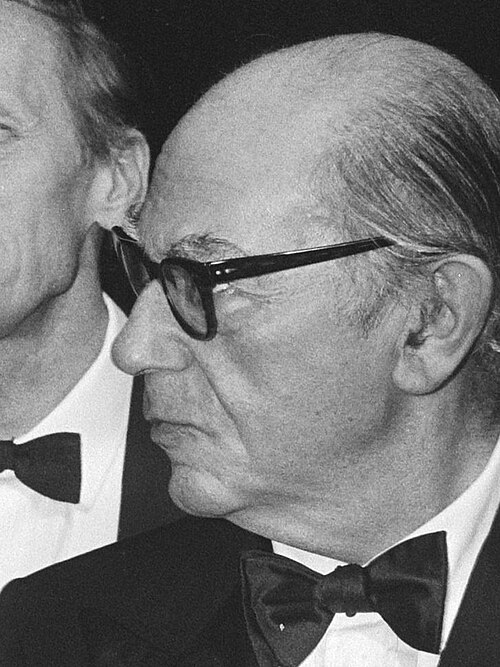
Isaiah Berlin (The Power of Ideas, 2000, and The Crooked Timber of Humanity, 1990): Berlin wrote at length about how grand, idealistic political ideas can turn into historical nightmares. He argued that when thinkers try to fit complex human societies into a single, rigid vision of utopia, that vision can be used to justify coercion, violence, and tyranny. Such ideas keep returning because each new generation produces idealists who believe their utopia will finally work.

CC BY-SA 4.0
Photo credit
Hannah Arendt (The Origins of Totalitarianism, 1951): Arendt studied how totalitarian ideologies such as Nazism and Stalinism took hold. She argued that their propaganda worked less by persuading people of particular lies than by offering isolated, lonely, and cynical people a consistent, orderly picture of the world that felt more reassuring than a chaotic reality. She saw the conditions that make this possible, including loneliness and social fragmentation, as dangers that can arise in any era.

U.S. public domain
Photo credit
George Santayana (The Life of Reason, 1905–1906): Santayana wrote the famous line, “Those who cannot remember the past are condemned to repeat it.” It appears in the first volume, Reason in Common Sense. He argued that progress depends on retaining what experience has taught us. Without a lasting collective memory, a society keeps starting over and repeating old mistakes.
3. Economics & Institutional Criticism

U.S. public domain
Photo credit
Thomas Sowell (A Conflict of Visions, 1987, and The Vision of the Anointed, 1995): Sowell asks why failed social and economic ideas refuse to die. He argues that a class of intellectuals, whom he calls the “Anointed,” judge ideas by their good intentions rather than their results. When a policy fails, he says, its defenders blame too little funding or poor execution instead of a flawed premise, and the idea is repackaged and sold to the next generation. Sowell’s critics dispute this portrait, but it remains an influential account of how ideas can outlive their failures.
4. Moral Psychology & Cognitive Bias

CC BY 2.0
Photo credit
Jonathan Haidt (The Righteous Mind, 2012): Haidt argues that human minds are built more for group loyalty and tribal moral judgment than for objective truth-seeking. Our moral reasoning often works to justify what our intuitions have already decided. In his words, morality “binds and blinds”: shared moral commitments hold groups together, often against a common rival, and the same bond can make it harder for members to see other points of view. Divisive or aggressive ideas can thrive for exactly this reason.
Public domain
Photo credit
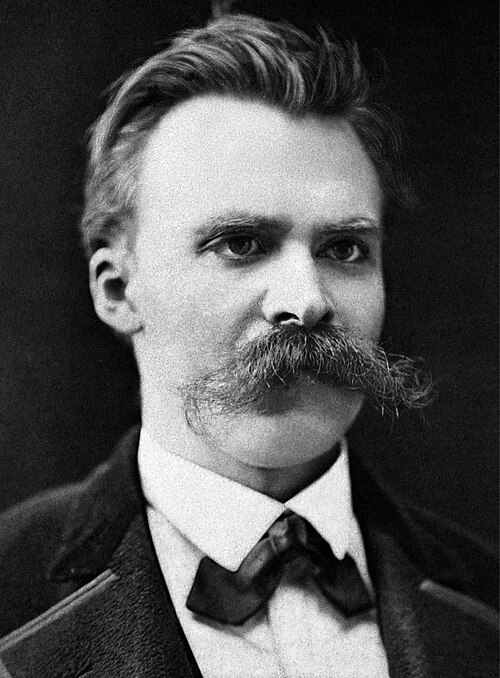
Friedrich Nietzsche (Beyond Good and Evil, 1886, and On the Genealogy of Morality, 1887): Nietzsche warned that societies drift toward “herd morality” and conformity. He argued that independent thinkers pay a heavy price for standing apart from the crowd, so comfortable, popular, and even destructive ideas can crowd out harder truths because the herd hands out social approval.
5. Contemporary Media & the Digital Age

Stephen McCarthy / SPORTSFILE / Web Summit
CC BY 2.0
Photo credit
Yancey Strickler and Venkatesh Rao: Two contemporary essayists offer a modern twist. In “The Dark Forest Theory of the Internet” (2019), Strickler borrows the “dark forest” idea from Liu Cixin’s science-fiction trilogy to describe how people are retreating from the hostile, gamified public internet into private spaces such as newsletters, group chats, and invite-only communities. Rao built on the idea with his notion of the “cozy web.” The implication for this essay’s theme is that the open online marketplace of ideas does not reliably reward quality or truth, so the loudest and most provocative ideas can dominate the public square while thoughtful conversation moves out of view.
Two Examples of How Good Ideas Survive
The Founding of the United States and the State of Israel
The ideas behind the founding of the United States and the modern State of Israel are instructive examples of the same rules at work: transmissibility, cognitive alignment, and utility to power.
The core principles of these two states, including democratic governance, individual liberty, and national self-determination, are widely viewed as good ideas. Yet these ideas succeed and survive for many of the same reasons bad ones do: they are highly infectious, they align with deep human biases, and they are exceptionally useful to those seeking to build or maintain power.
1. High Transmissibility: Simple, Emotionally Resonant Narratives
For an idea to survive and spark a revolution or a national migration, it cannot merely be intellectually sound. It has to be a powerful story that spreads easily.
The United States: The founding ideas were packaged into highly transmissible, punchy persuasion. Thomas Paine’s Common Sense (1776) and the Declaration of Independence, in which Thomas Jefferson called certain truths “self-evident,” were masterclasses in memetics. They translated complex Enlightenment philosophy (John Locke, Montesquieu) into emotional, easily grasped ideas: liberty versus tyranny and the right to govern oneself.
The State of Israel: Zionism took a modern political idea, nationalism, and fused it with a 2,000-year-old cultural, religious, and literary narrative of “Return.” The phrase “Next year in Jerusalem,” recited each year at the end of the Passover Seder and at the close of Yom Kippur, was already a highly transmissible cultural meme, and longing for Zion ran through Jewish daily prayer for centuries. Theodor Herzl and other Zionist leaders mobilized this existing framework, making the idea of a modern Jewish state instantly recognizable to a scattered global population.
2. Alignment with Human Cognitive Biases
Good ideas survive when they tap the same evolved instincts that bad ideas use: tribalism, the drive to survive, and the desire for agency.
The In-Group/Out-Group Bias (Tribalism): Both movements were united, in part, by a shared opponent. For the American colonists, it was the British Crown, which they cast as tyrannical. For early Zionists, it was persecution in Europe, such as the pogroms in the Russian Empire and the Dreyfus affair in France, and later the catastrophe of the Holocaust, which gave the movement new urgency. Human beings are wired to cooperate intensely when they perceive a common threat, and the “good ideas” of democracy and sovereignty became vehicles for collective survival.
Agency and Control: People naturally crave control over their own destinies. The ideas of “liberty” (U.S.) and “self-determination” (Israel) speak directly to that craving. They offer a story of agency in the face of oppression, which is far more appealing than submission or passivity.
3. Utility to Those Seeking Power
Ideas do not implement themselves; they need leaders, capital, and military force. The founders of both nations were not only idealists. They were pragmatic political actors who found these ideas extremely useful for building structures of power.
The United States: The American merchant class, plantation owners, and local elites needed a powerful justification for breaking away from British taxation and legal control. Slogans such as “no taxation without representation” and the Enlightenment defense of individual property rights matched the economic and political ambitions of the colonial elite. By championing these liberties, the founders won the popular support they needed to build a new, independent power structure.
The State of Israel: In the mid-20th century, Jewish leaders needed a framework for building state institutions, raising an army, and winning international recognition. The ideas of modern democratic statehood, national sovereignty, and historical justice were essential tools of statecraft. They helped David Ben-Gurion and the provisional government legitimize their authority at home and negotiate on the world stage, including with the United States and the Soviet Union, both of which recognized the new state in 1948, and at the United Nations, whose General Assembly voted for partition in 1947.
Ideas endure when people can remember them, repeat them, believe in them, and build institutions around them. That is why false and destructive ideas can survive repeated failure, and why valuable ideas need more than sound reasoning to prevail. From political movements to internet memes, the same forces recur: a compelling story, a receptive audience, a shared identity, and people with the means to carry the idea forward. The contest of ideas is shaped by human psychology, communication, and power. Understanding those forces is the first step toward recognizing bad ideas before they take hold and giving better ones a chance to last.
Photo Credits
- Richard Dawkins: Steve Jurvetson; cropped Wikimedia Commons image, CC BY 2.0. Wikimedia Commons source | License
- Susan Blackmore: StagiaireMGIMO; Wikimedia Commons, CC BY-SA 4.0. Wikimedia Commons source | License
- Isaiah Berlin: Rob C. Croes / ANEFO, Dutch National Archives; cropped Wikimedia Commons image, CC0 1.0. Wikimedia Commons source
- Hannah Arendt: Barbara Niggl Radloff / Münchner Stadtmuseum; cropped Wikimedia Commons image, CC BY-SA 4.0. Wikimedia Commons source | License
- George Santayana: Wide World Photos, 1947; U.S. public domain as identified by Wikimedia Commons. Wikimedia Commons source
- Thomas Sowell: Bell Telephone Magazine, 1964; U.S. public domain as identified by Wikimedia Commons. Wikimedia Commons source
- Jonathan Haidt: Miller Center; cropped Wikimedia Commons image, CC BY 2.0. Wikimedia Commons source | License
- Friedrich Nietzsche: Friedrich Hermann Hartmann, circa 1875; public domain. Wikimedia Commons: Wikimedia Commons source
- Yancey Strickler: Stephen McCarthy / SPORTSFILE / Web Summit, 3 November 2015; CC BY 2.0. Wikimedia Commons source | License. Displayed at reduced size without additional cropping.