


Muslim Brotherhood Ideology
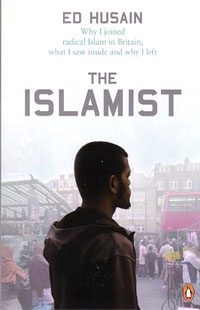
Ed Husain is unusually well qualified to document Islamism and Muslim Brotherhood ideology because of a rare combination of lived experience inside radical networks, formal scholarly training in the Middle East and Western philosophy, policy-level engagement with governments, and sustained public analysis of the ideology’s history and contemporary reach.
Born Mohamed Mahbub Husain in London’s East End on December 25, 1974, to a Bengali Muslim father (with family ties tracing to the Hadramaut region of Yemen via the saint Shah Jalal) and a mother of Saudi Arabian background, Husain grew up in a traditional Sufi-oriented household. His early religious formation emphasized spiritual practice rather than political activism. As a teenager in the late 1980s and early 1990s, however, he entered the orbit of Islamist organizations active in Tower Hamlets and East London. He first joined the Young Muslim Organization, linked to the Jamaat-e-Islami tradition, and later became deeply involved with Hizb ut-Tahrir, participating in campus activism, recruitment, and ideological propagation while studying for A-levels and attending college. He has described this period candidly as immersion in an ideology that subordinated classical Islamic ethics to the goal of establishing a transnational caliphate through political and, where necessary, confrontational means.
A combination of local violence, including murder, hypocrisy in avowedly Muslim nations, and a rediscovery of classical Islamic spirituality drove Husain to leave radical Islamism. He left those networks, studied Arabic and Islamic subjects intensively, including two years at the University of Damascus in Syria and time in Saudi Arabia, and completed a BA in history followed by an MA in Middle Eastern Studies at SOAS, University of London, under scholars such as Gerald Hawting and Charles Tripp. He later earned a PhD in Western philosophy and Islam at the University of Buckingham under the supervision of Sir Roger Scruton. His doctoral work examined philosophical definitions of the modern West and their parallels, and tensions, with classical Islamic thought as a rebuttal to simplistic “clash of civilizations” framing.
Professionally, Husain co-founded the Quilliam Foundation in 2008 with other former radicals, including Maajid Nawaz, establishing one of the earliest dedicated counter-extremism think tanks focused on ideological critique rather than purely security measures. Quilliam Foundation Ltd. ceased operations in 2021 because of the difficulty of sustaining a nonprofit during COVID-19 lockdowns. Husain has served as a senior adviser to former British Prime Minister Tony Blair, worked at the Council on Foreign Relations as a senior fellow focused on Middle East policy, Arab-Israeli relations after the Abraham Accords, Gulf geopolitics, and Islamist terrorism, and held teaching positions at Georgetown University’s School of Foreign Service and Columbia University’s School of International and Public Affairs. His books, The Islamist (2007), which remains a primary insider account of radicalization in Britain; The House of Islam: A Global History (2018); and Among the Mosques (2021), combine memoir, historical analysis, and fieldwork. He has written extensively for major outlets and appeared across international media. This trajectory, as a former activist who rejected the ideology from within, an Arabic-speaking scholar trained in both classical Islamic and Western sources, and a policy practitioner, gives him credible authority to map the intellectual genealogy of Islamism, including the Muslim Brotherhood’s origins and its distinction from the broader Muslim population.
Where Islamist Terrorism Really Comes From
The Muslim Brotherhood arose in 1928 in Ismailia, Egypt, in the Suez Canal Zone under British influence. Its founder was Hassan al-Banna, a young primary-school teacher of Arabic, born in 1906 in Mahmudiyya near Alexandria. Al-Banna had been shaped by traditional learning through his father, exposure to Sufi networks, including the Hassafiyya order, and the reformist currents associated with figures such as Rashid Rida. He arrived in Ismailia in 1927 after training at Dar al-Ulum in Cairo. The city concentrated foreign economic power, European cultural presence, and the dislocations of colonial modernity. Al-Banna preached in mosques and coffeehouses, criticizing what he saw as the moral and political decay of Egyptian Muslim society under Western influence: dancing, alcohol, mixed socializing, Protestant Christian missionary activity, and broader secularizing trends.
In March 1928, corresponding to Dhu al-Qi’da 1347 in some accounts, six workers employed by the British military camps or the Suez Canal Company approached al-Banna. They expressed frustration at Muslim powerlessness and asked him to lead a practical effort to restore Islamic dignity and service. Al-Banna accepted. They took an oath to act as “troops for the message of Islam.” The group took the name al-Ikhwan al-Muslimun (Society of the Muslim Brothers), emphasizing fraternal solidarity in the service of Islam. Early activities centered on education, evening classes, Qur’anic instruction, moral reform, and mutual aid; a mosque and schools followed. The movement was not initially a formal political party, but rather a society for Islamic renewal and social work that rapidly developed a hierarchical organization, cells, and expansion beyond Ismailia.
Husain emphasizes the specific historical shocks that animated al-Banna. The most immediate was the formal abolition in 1924 of the Ottoman Caliphate by Mustafa Kemal Atatürk, founder of the Republic of Turkey. Although the caliphate had long been largely symbolic, its end registered for many Muslims as a profound rupture, the termination of a continuous political-religious institution dating to the early Islamic centuries. Al-Banna and his circle viewed this as a catastrophe that demanded an organized response. Secondary grievances included the visible Westernization of Egyptian urban life, the presence of Christian missionaries, and the sense that traditional religious authorities, notably al-Azhar, and Sufi orders offered only gradualist or quietist answers rather than confrontational revival. Al-Banna rejected those approaches in favor of a more activist, comprehensive project: Islam as a total system encompassing creed, worship, nation, citizenship, religion, state, spirituality, action, scripture, and force.
In Husain’s framing, the Brotherhood from its inception was less a simple return to classical Islamic norms than the crystallization of a modern political ideology. Classical Islamic history contained rich traditions of governance, law, and scholarship, but the specific package was new: a reconstituted caliphate conceived as a supranational, expansionist state governed by a particular reading of sharia as comprehensive positive law, combined with systematic political organization modeled partly on contemporary European movements. Husain stresses that the Brotherhood absorbed and adapted elements from the ideological atmosphere of the interwar period. He points to contacts and affinities with Nazi and fascist currents: al-Banna’s brother Abdurrahman maintained links with Haj Amin al-Husseini, the Mufti of Jerusalem, who met Hitler, disseminated Mein Kampf, and broadcast pro-Axis propaganda; a former Nazi official, von Ellis, later Omar Amin, found protection in Brotherhood circles. Parallel themes included supremacist self-understanding, expansionist “frontiers” rather than fixed borders, a cult of struggle and martyrdom, and intense anti-Jewish animus that went beyond traditional religious polemics. Marxist organizational models and the language of systemic social justice also left traces, later amplified by thinkers such as Sayyid Qutb.
The early Brotherhood combined religious rhetoric with modern mass-organization techniques: graded membership, secret apparatuses, youth wings, publications, and a dual strategy of social service, including schools, clinics, and charities, and political agitation. By the late 1930s and 1940s, it had grown dramatically in Egypt, claiming hundreds of thousands of adherents, and had begun to export the model. Its slogan, “Islam is the solution” (al-Islām huwa al-ḥāl), encapsulated the claim that a correctly applied Islamic system could solve every social, political, and economic problem. It is an ideological assertion rather than a classical theological one. The movement’s paramilitary dimensions and involvement in violence, including the 1948 assassination of Egypt’s prime minister, Mahmoud an-Nukrashi Pasha, were present from its early stages, even as it maintained public charitable and educational faces.
Husain repeatedly underscores the quantitative and qualitative distinction between this ideology and the vast majority of the world’s Muslims. Roughly two billion people identify as Muslim. Even on a generous estimate that includes broader sympathizers and global affiliates, those who actively adhere to Muslim Brotherhood ideology number at most around five million. This is an organized minority operating among a far larger, more diverse, and largely non-ideological population. Most Muslims, in Husain’s account, practice a culturally embedded, often Sufi-inflected or simply traditional Islam focused on personal piety, family, local community, and the ordinary obligations of faith rather than the project of reconstituting a caliphate or treating politics as the central religious duty. The Brotherhood’s success has always depended on disciplined cadres, institutional capture, including mosques, student groups, charities, and media, exploitation of grievances, and the ability of a coherent minority to shape discourse within a decentralized religious community that lacks a single hierarchical authority comparable to a papacy.
This demographic reality is central to Husain’s analysis. The ideology is not “Islam” in any simple sense; it is a twentieth-century political project that selectively appropriates Islamic vocabulary, history, and symbols while rejecting or sidelining large parts of the classical tradition, including much of Sufism, philosophical theology, and historical pragmatism about governance. Its rejection by governments and populations in Egypt, the UAE, Saudi Arabia, and elsewhere after periods of experimentation is, for Husain, evidence that Muslim-majority societies themselves can and do distinguish the Brotherhood from Islam as practiced by ordinary believers. Western societies, he argues, have often failed to make the same distinction, sometimes treating Brotherhood-linked networks as authentic community representatives or even as useful interlocutors against more overtly violent groups. This amplifies an ideology that most Muslims do not share, except in places such as Gaza, where roughly 41% to 49% of Gazans have expressed a preference for Hamas in political or legislative polling.
The 1928 founding marks the institutional birth of modern Islamism as a political ideology. From a small circle consisting of a schoolteacher and six workers in an Egyptian canal-zone town, it developed into a transnational movement whose intellectual heirs and organizational offshoots include Hamas, elements that influenced al-Qaeda’s early formation, and various European and North American networks operating under community, charitable, or advocacy labels. Its durability stems less from mass popular endorsement than from organizational discipline, generational transmission of the ideology, adaptation to local conditions, and the persistent appeal of a simple, totalizing answer: “Islam is the solution.” Understanding Muslim Brotherhood ideology, including its specific Egyptian interwar setting, its founder’s grievances, its synthesis of religious revival with modern authoritarian and totalitarian organizational forms, and its limited numerical base relative to the global Muslim population, is essential to distinguishing a political ideology from a world religion.