

Modern Hebrew letters, final forms, sounds, traditional numerical values, and their relationship to the ancient Northwest Semitic writing tradition.

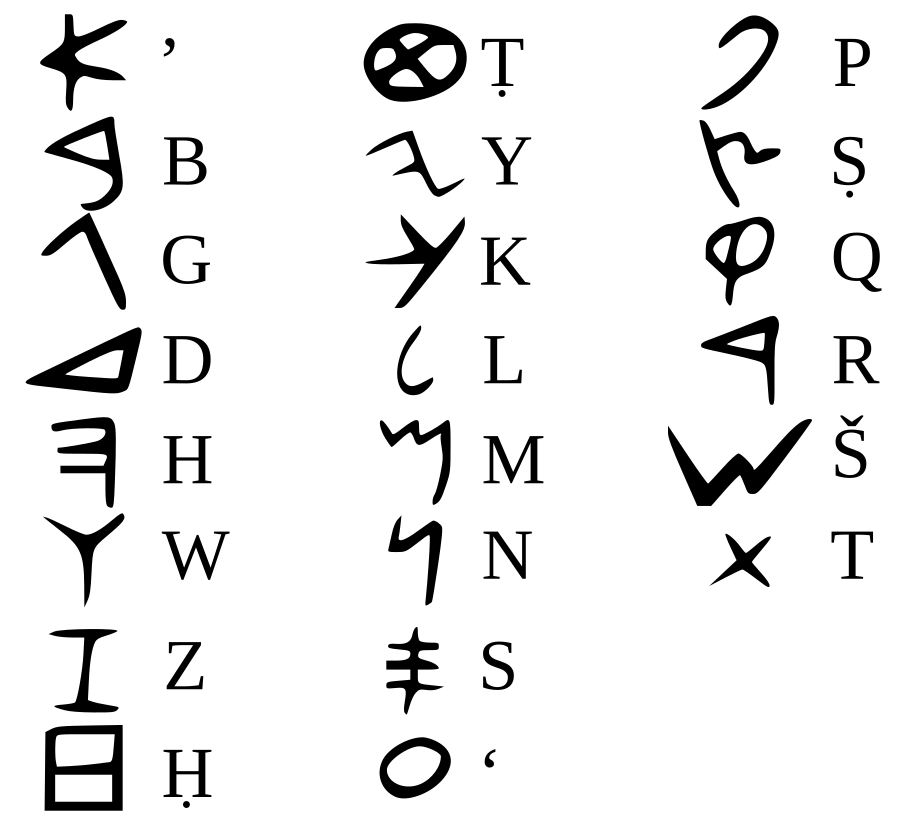
| Modern | Final | Letter name | Romanization | Modern sound / use | Value | Phoenician | Name-origin / pictorial association |
|---|---|---|---|---|---|---|---|
| א | — | Alef | ʾ / often silent | Usually silent in modern speech; historically a glottal stop /ʔ/. | 1 | 𐤀 | Ox / cattle; one of the clearer traditional acrophonic name associations. |
| ב | — | Bet / Vet | b / v | בּ = b; ב = v. | 2 | 𐤁 | House. |
| ג | — | Gimel | g | Hard g as in “go.” | 3 | 𐤂 | Often connected with “camel”; the ancient etymology is not completely certain. |
| ד | — | Dalet | d | d as in “door.” | 4 | 𐤃 | Door. |
| ה | — | He | h | h as in “house”; may be silent word-finally. | 5 | 𐤄 | Ancient name origin uncertain; proposed pictorial explanations vary. |
| ו | — | Vav | v | v in modern Israeli Hebrew; historically /w/. | 6 | 𐤅 | Traditionally associated with a hook or peg. |
| ז | — | Zayin | z | z as in “zone.” | 7 | 𐤆 | Ancient etymology uncertain; traditionally associated with a weapon. |
| ח | — | Het | ḥ / kh | A voiceless guttural sound, commonly /χ/ in Israeli Hebrew. | 8 | 𐤇 | Ancient etymology uncertain; often associated with an enclosure or fence. |
| ט | — | Tet | t | t in modern Hebrew; historically distinct from Tav. | 9 | 𐤈 | Ancient name origin is uncertain. |
| י | — | Yod | y | y as in “yes”; also functions in vowel spelling. | 10 | 𐤉 | Hand. |
| כ | ך | Kaf / Khaf | k / kh | כּ = k; כ/ך = /χ/ (“kh”). | 20 | 𐤊 | Palm of the hand. |
| ל | — | Lamed | l | l as in “light.” | 30 | 𐤋 | Goad or staff used to drive animals. |
| מ | ם | Mem | m | m as in “mother.” | 40 | 𐤌 | Water. |
| נ | ן | Nun | n | n as in “now.” | 50 | 𐤍 | Ancient etymology uncertain; often associated with a fish. |
| ס | — | Samekh | s | s as in “sun.” | 60 | 𐤎 | Ancient name origin uncertain; later Hebrew associations with “support” should not be treated as certain pictorial history. |
| ע | — | Ayin | ʿ / often silent | Usually not pronounced distinctly in mainstream Israeli Hebrew; historically /ʕ/. | 70 | 𐤏 | Eye. |
| פ | ף | Pe / Fe | p / f | פּ = p; פ/ף = f. | 80 | 𐤐 | Mouth. |
| צ | ץ | Tsadi | ts | ts as in “cats.” | 90 | 𐤑 | Ancient name origin is uncertain. |
| ק | — | Qof | q / k | Usually pronounced k in modern Israeli Hebrew. | 100 | 𐤒 | Ancient etymology uncertain; several traditional proposals exist. |
| ר | — | Resh | r | Modern Israeli pronunciation is commonly uvular; other Hebrew traditions use a trilled/tapped r. | 200 | 𐤓 | Head. |
| ש | — | Shin / Sin | sh / s | שׁ = sh; שׂ = s. | 300 | 𐤔 | Tooth. |
| ת | — | Tav | t | t in modern Israeli Hebrew. | 400 | 𐤕 | Mark or sign. |